Is Your Business Ready for Voice AI? A 4-Step Qualification Checklist
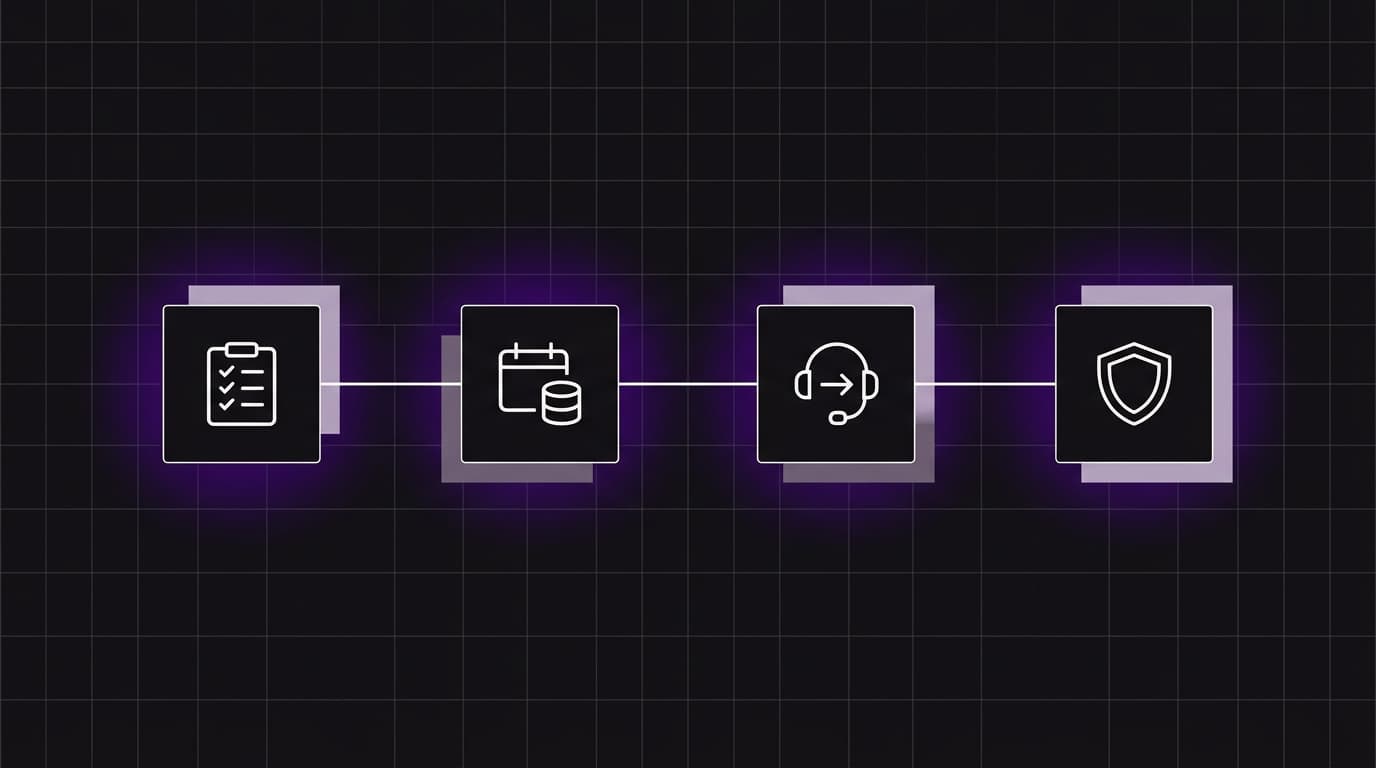
Voice automation is incredibly powerful, but it isn't a magic wand. For business owners, deploying an AI receptionist promises instant savings, 24/7 call coverage, and zero missed leads. However, the success of a voice agent doesn't depend on how smart the AI is—it depends on the readiness of the business operations behind it.
At Orbitali, we build the real-time runtime that powers voice conversations, while leaving business logic where it belongs: in your own backend. This clear boundary means your AI agent is only as effective as the workflows and integrations you connect to it. Before you write a single line of code or build an agent, use this 4-step qualification checklist to determine if your business is ready for Voice AI.
Step 1: Repeatable Workflows (The FAQ and Booking Baseline)
Voice AI thrives on structure. If your human front-desk team spends their day answering highly unique, creative inquiries, a voice bot will struggle. But if they find themselves repeating the same information hour after hour, you have a prime candidate for automation.
To qualify your workflows, analyze your call logs. Look for:
- Repetitive FAQs: Do callers constantly ask about business hours, parking, refund policies, or location details?
- Standardized Scheduling: Is booking an appointment a matter of finding an open slot, taking a name, and confirming the date?
If 70% to 80% of your incoming calls revolve around these predictable paths, your workflows are ready. You can easily feed these details into Orbitali's native knowledge base to ground the agent's responses in factual, static information.
Step 2: Connected Systems (Accessible APIs and Calendars)
An AI receptionist that can only talk is just an automated FAQ page. The real magic happens when the agent does things—like booking a table, looking up an order status, or updating a CRM lead.
Because Orbitali operates under the principle of "You own the logic, Orbitali runs the agent," all transaction data must remain in your systems. For the agent to interact with these systems, they must be accessible via standard online integrations.
Ask yourself:
- Is your calendar connected? Does your scheduling tool (like Google Calendar, Calendly, or a custom booking system) expose public APIs or webhooks?
- Is your CRM or database open? Can your customer record system receive standard HTTPS
POSTrequests to create or update contacts?
If your systems are locked behind offline spreadsheets or legacy desktop software with no API access, you'll need to upgrade your infrastructure before deploying a transactional voice agent.
Step 3: Human Support (A Reliable Handoff Path)
No voice agent can—or should—handle 100% of customer interactions. Callers may have complex, emotional situations, highly specific billing disputes, or simply express a preference to speak with a human. A successful Voice AI implementation requires a clear safety net.
Before launching, you must designate a team member to act as the escalation point. If the AI detects frustration or encounters an out-of-scope request, it needs to hand the call off seamlessly.
Orbitali makes this easy with the native transfer_call system tool. When triggered, the platform transfers the live call directly to a designated telephone number:
{
  "tool": "transfer_call",
  "arguments": {
    "destination": "+15551234567"
  }
}
If you don't have a team member or a live call center ready to receive these escalated transfers, callers will hit a dead end, resulting in poor customer experience and dropped calls.
Step 4: Clear Boundaries (Setting Strict Scope)
The biggest failure mode in voice automation is scope creep. Trying to make your AI agent do everything at once leads to hallucinated answers and broken API calls. You must define exactly what the bot is authorized to handle—and what it must stay away from.
A great boundary document lists:
- In-Scope Tasks: E.g., verifying booking times, answering simple FAQs from the knowledge base, and collecting contact details for callback requests.
- Out-of-Scope Tasks: E.g., negotiating custom contract terms, processing refunds directly, or diagnosing complex technical support issues.
By writing down these boundaries early, you can design tight system instructions and prompt constraints that keep the model focused and safe.
Low Risk, High Leverage: The Value of Qualification
Qualifying your business readiness is the highest-leverage step you can take. Because Orbitali separates the conversation runtime from your backend logic, mapping out these four steps allows you to filter out low-quality leads and identify operational gaps before you write a single line of integration code.
By ensuring you have repeatable workflows, connected systems, a human backup, and clear operational boundaries, you set your AI receptionist—and your business—up for undeniable success.
Ready to test your business workflows? Read our Platform Architecture Guide or sign up for an Orbitali developer account to build your first voice agent.